
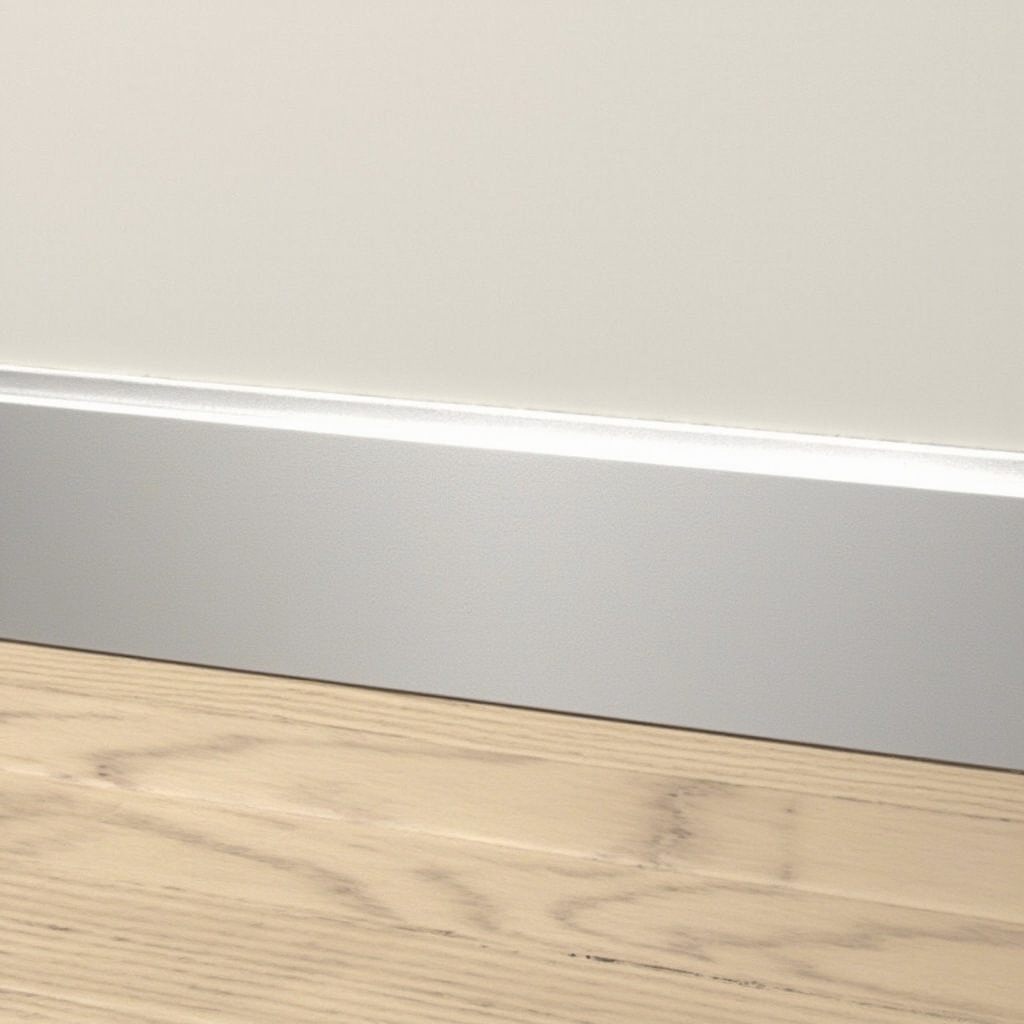
 Let’s be brutally honest: nobody wants to re-plaster an entire wall just because the bottom two inches look like a rollercoaster. You’ve painted, you’ve patched, you’ve cursed at the gap between your new flooring and that wavy drywall. The standard fix? Caulk it, pray it dries straight, and then watch it crack three months later. Or worse, you install wooden baseboards that twist and bow, exposing every single flaw you tried to hide.
There is a smarter, faster, and frankly more elegant solution that most homeowners overlook: Aluminum Alloy Baseboard.
I’m not talking about the flimsy, industrial-looking metal strips you see in commercial kitchens. Modern aluminum baseboards are sleek, painted, and designed to mimic wood grain or matte finishes. But here’s the kicker—they don’t flex like wood. They don’t absorb moisture like MDF. And most importantly, they have a secret superpower: they can mask a truly ugly, uneven wall bottom without you having to fix the wall itself.
How does this work? Think of aluminum as a rigid, straight ruler. When you install a wooden baseboard on a wavy wall, the wood bends to follow the wall’s contour, which means you still see the gap at the top or bottom. But aluminum stays straight. You install it level, not parallel to the floor. This creates a clean, horizontal line that visually “cuts off” the unevenness below. The eye stops at that crisp metal edge and ignores the chaos behind it.
Here is the real-world scenario that sells this product every time: you just laid luxury vinyl plank flooring. The floor is perfectly level, but the old drywall has a dip near the corner. A wooden shoe molding would require a bead of caulk thick enough to fill a sinkhole. An aluminum baseboard, however, can be scribed to the floor with a simple silicone bead, or better yet, you can use a baseboard with a built-in rubber gasket that hugs the floor. The aluminum body stays rigid, the gasket hides the gap, and you walk away with a professional finish in half the time.
The installation speed is another hidden advantage. Wood requires nail guns, miter saws, wood filler, sanding, and paint. Aluminum baseboards often come with clip systems. You screw the clips to the wall, snap the board on, and you’re done. No painting. No sanding. No waiting for glue to dry. If you are a DIYer who hates trim work, this is your shortcut to a finished room in an afternoon.
Let’s talk about durability while we are at it. Uneven walls are often found in basements, garages, or older homes with foundation settling. These are damp environments. Wood baseboards rot. MDF swells. Aluminum laughs at moisture. You can mop right up to it. You can drop a heavy box on it. It will dent before it breaks, but a quick touch-up paint hides that too.
Some people worry that metal will look cold or industrial. The counterargument is simple: you are covering the bottom of a wall, not building a spaceship. The finish options today include warm white, brushed silver, and even realistic wood-grain laminates. From three feet away, nobody knows it is aluminum. They just see a straight, clean line that your crooked walls could never achieve with wood.
If you are renovating on a budget or a timeline, stop fighting your walls. You don’t need to be a plastering expert to get a straight trim line. You need a material that refuses to compromise. Aluminum baseboard is that material. It is the cheat code for the imperfect home, the shortcut that makes visitors say, “Wow, your trim looks so clean,” while you smile and keep the secret to yourself.